

Walk into any corporate office in Singapore—or anywhere else in the world—and chances are, you’ll be greeted by the same old flooring: beige, grey, or some other muted neutral. It’s the go-to palette, praised for being safe and inoffensive. But let’s be honest—it’s also dull.
This phenomenon, often called the Beige Office Syndrome, reflects a widespread hesitance to take creative risks in workplace design. And the humble office carpet, which spans the majority of the floor space, becomes a silent victim of this trend. But what if it didn’t have to be that way?
Incorporating colour theory into your office carpet choices can completely redefine your workspace. With the right strategy, your carpet can become a design asset, not just a background element.
In this guide, you’ll discover how applying colour theory to your office carpet design can go beyond aesthetics and support real business goals. Here’s what we’ll cover:
- Why traditional neutral tones like beige may be holding your office design back
- How different colours influence employee mood, productivity, and collaboration
- The link between carpet colour and brand identity
- Where and how bold colours can be used effectively in the workplace
- How to avoid overwhelming your space with too much colour
- Practical tips for integrating colour without a complete renovation
By the end of this guide, you’ll see how strategic use of colour theory can elevate your office from uninspired and overlooked to a space that’s purposeful, engaging, and memorable.
Colour Psychology Meets Office Culture
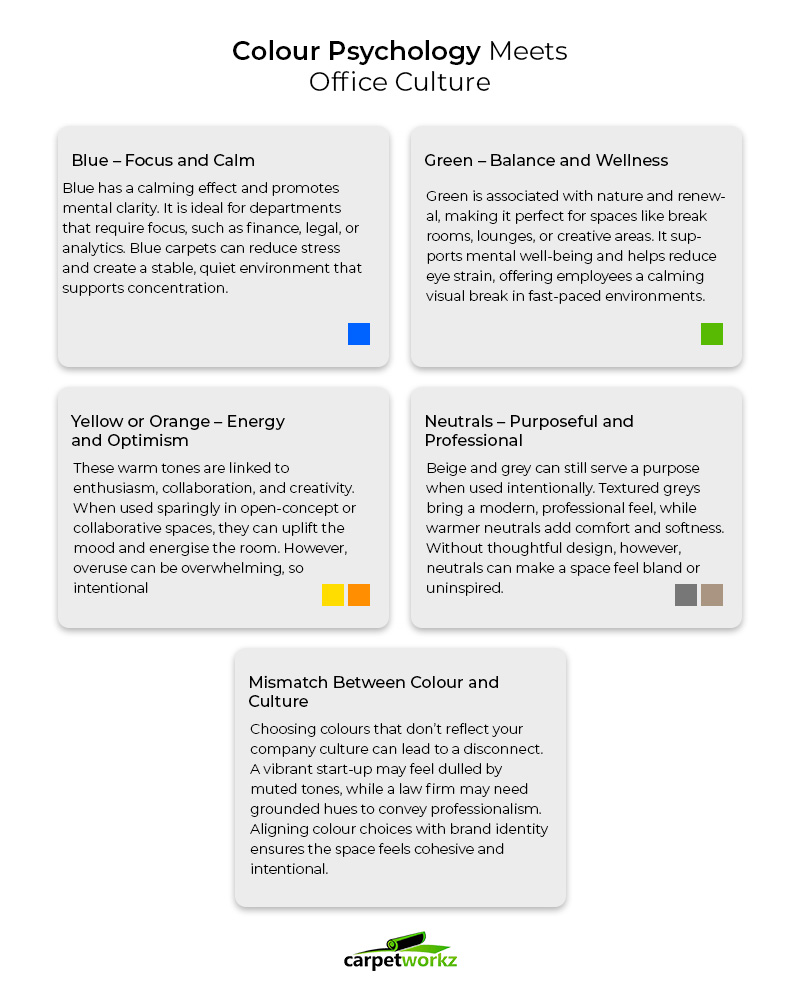
We often underestimate how much our environment influences our performance and mood. But the truth is, even something as seemingly subtle as carpet colour can make a big difference. Here’s how different colours, guided by colour theory, can shape office culture and productivity.
-
Blue for Focus and Calm
According to colour theory, blue is known for its calming effect and its ability to promote mental clarity. It’s ideal for departments where focus is essential—think finance, legal, or analytics teams. Blue carpet flooring can help reduce stress and create a sense of stability, making it a strong choice for areas that demand concentration and quiet.
-
Green for Balance and Wellness
Green is associated with nature, renewal, and balance. It’s a great choice for break rooms, lounge areas, or creative spaces. In colour psychology, green is believed to support mental well-being and reduce eye strain—two things every fast-paced office can benefit from. Whether it’s a soft sage or a muted olive, green flooring elements can offer employees a moment of calm in an otherwise busy day.
-
Yellow or Orange for Energy and Optimism
These warm tones are often linked to enthusiasm, collaboration, and creative thinking. While too much can feel overwhelming, strategic pops of yellow or orange—especially in open-concept collaborative zones—can energise the space and boost mood. Colour theory reminds us that these shades are most effective when used intentionally and in moderation.
-
Neutrals Aren’t Bad—But They Should Be Intentional
Neutrals like beige and grey still have their place, but defaulting to them across the entire office can result in a flat, uninspired environment. The trick is to use neutral tones with purpose. Textured greys can feel modern and professional, while warmer neutrals bring comfort and softness. With a little guidance from colour theory, even your neutrals can contribute meaningfully to the overall mood.
-
Mismatch Between Colour and Culture
One of the biggest oversights in office design is selecting colours that don’t reflect the culture of the company. For instance, a youthful, high-energy start-up may find that overly subdued flooring drains the vibrancy out of the space. On the other hand, a law firm might need a more grounded palette to convey professionalism. By aligning your flooring with your brand personality, you can create a space that feels cohesive and intentional.
In short, colour is more than just decoration—it’s communication. Through colour theory, your office carpet becomes a powerful design tool that speaks volumes about your values, goals, and workplace culture.
Your Carpet = Your Brand’s Silent Ambassador
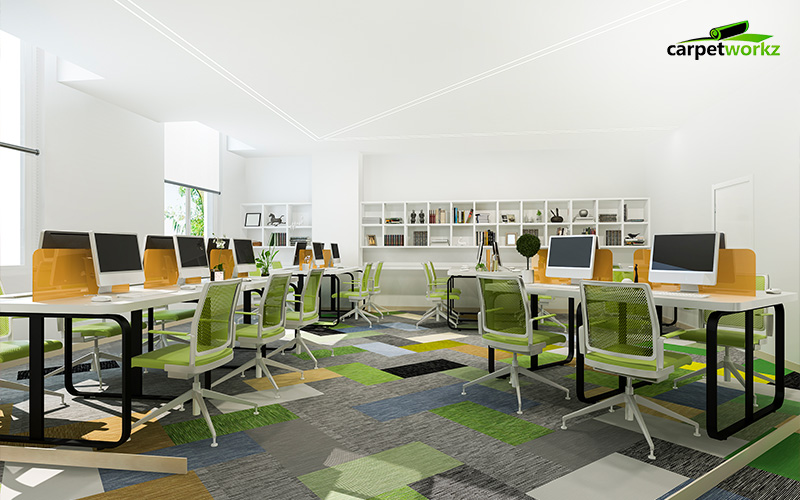
When people walk into your office, they start forming opinions about your company within seconds, often before a single word is exchanged. While logos and furniture get most of the attention, the carpet is one of the first and most consistent visual elements people encounter. This is where design meets storytelling, and where colour theory can quietly yet powerfully shape brand perception.
-
Align Colours with Brand Values
Think about the qualities that define your business. Is it polished and professional? Warm and people-focused? Bold and cutting-edge? The colours underfoot can reinforce these traits. Deep, rich hues suggest tradition and authority, while lighter, vibrant tones signal energy and innovation. By applying colour theory, you ensure that every shade aligns with the emotional cues you want to send to staff and clients alike.
-
Subtle Branding Through Flooring
Branding doesn’t always need to be loud. In fact, some of the most effective applications are those that whisper. Instead of coating the entire office in corporate colours, use them in thoughtful ways—accent tiles in meeting spaces, directional pathways in open-plan layouts, or colour-coded zones that match your brand palette. These subtle integrations, guided by colour theory, can unify the space without visual overload.
-
Tell a Story Through Space
The flow of colour through your office can help create a narrative, from the moment someone steps through the front door to where they collaborate, focus, or unwind. A bold entrance floor mat can set the stage, while progressively softer tones can guide people deeper into the workspace. When colour is used intentionally, each transition becomes part of a larger experience that reflects your culture and values.
Ultimately, your carpet isn’t just part of the floor—it’s part of your identity. With smart use of colour theory, flooring can evolve from a background detail into a strategic design element that subtly supports your brand every step of the way.
When Bold Works: Office Zones That Benefit from Colour Play

Now that we’ve explored how carpet colour supports your brand, it’s time to look at how colour theory can guide practical design choices within your office layout. While not every part of the office needs to make a statement, using bold colours in the right places can enhance how people interact with a space.
Here’s how colour theory is used to help assign hues based on purpose, not just preference.
-
Collaboration Zones
These are the lively hubs of your office, places where energy, movement, and interaction matter. Bold, warm hues like orange and red are known to stimulate creativity and conversation. Through the lens of colour theory, these colours raise energy levels and can encourage spontaneous idea-sharing and group engagement. Whether used in carpet tiles, borders, or graphic patterns, they help define these spaces and make them feel dynamic.
-
Focus Areas
In contrast, focus zones require a sense of calm and control. Cool colours such as teal, soft blue, or sage are ideal for encouraging concentration and reducing visual distractions. Incorporating these hues into flooring can signal a transition into a quieter, more intentional environment, helping employees shift into deep work mode more easily.
-
Pantry or Break Corners
Relaxation zones benefit from a different palette altogether. Earthy, comforting colours like mustard, olive, or terracotta create a cosy atmosphere where staff can truly unwind. These tones help reduce mental fatigue, supporting wellness and emotional balance during the workday.
-
Reception or Client Zones
First impressions matter. A bold carpet in your reception area—whether it’s a striking brand colour, a unique pattern, or a rich texture—in your reception area can establish your identity the moment someone enters. Colour theory suggests that high-impact visuals in these areas signal confidence, creativity, or professionalism, depending on your chosen palette.
-
Wayfinding Through Flooring
Colour can also be functional. In open-plan layouts, strategically placed blocks or lines of colour help with navigation. They subtly guide visitors and employees through the space—no signs required. It’s an elegant and practical style that blends design and usability.
By applying bold colour strategically and purposefully, you can bring life and function to your office, all without overwhelming it.
Avoiding the “Clown Carpet” Look: Balancing Bold with Neutral

While bold carpet colours can energise your office and bring purpose to each space, there’s a fine line between expressive and excessive. Without thoughtful planning, vibrant flooring can quickly become chaotic—what many designers jokingly refer to as the “clown carpet” effect. Fortunately, the solution isn’t to abandon bold choices altogether, but rather to balance them strategically.
At this point, colour theory serves as a powerful guide, not just for choosing colours, but for combining them in ways that support harmony, clarity, and function.
-
The 80/20 Rule
A tried-and-tested design principle, the 80/20 rule suggests using neutral tones for 80% of your flooring, while reserving 20% for impactful colour accents. This balance ensures that bold elements stand out without overwhelming the senses, creating focal points instead of visual clutter.
-
Accent Tiles and Borders
If you’re working with modular carpet tiles, you already have a powerful design tool at your disposal. Use bold colours sparingly—perhaps as a border around meeting rooms or a stripe down collaborative walkways. These small touches draw attention without overpowering the surrounding environment.
-
Layering with Rugs or Mats
Want to introduce colour without making permanent changes? Rugs or loose mats in bold hues can be layered over neutral carpets to define spaces, add comfort, and inject personality. They’re easy to swap out, which makes them ideal for testing how different colours feel in practice.
-
Choose Textured Neutrals
Not all neutrals are boring. Greys, taupes, and beiges with subtle patterns or woven textures add depth and dimension to your flooring. These can serve as the perfect backdrop for bold accents, enhancing visual interest while maintaining cohesion.
-
Test in Zones First
Before committing to a vibrant colour across a large area, pilot it in a smaller space. This lets you observe how light, furniture, and foot traffic interact with the new palette. It also allows time to refine your choices based on real-world feedback—another key principle in effective colour theory application.
To summarise it perfectly, blending bold tones with carefully selected neutrals results in an office space that feels modern, intentional, and easy on the eyes. Colour becomes a refined design element, one that quietly supports function, elevates mood, and shapes a more meaningful workspace experience.
Frequently Asked Questions
-
Will using bold carpet colours make my office look unprofessional?
Not if done strategically. Bold doesn’t mean garish—it means confident and purposeful. When paired with neutrals and aligned with your brand identity, bold colours can actually elevate the perception of your workspace.
-
What if I want to introduce colour without changing the entire carpet?
Modular carpet tiles or area rugs are great solutions. You can refresh just one section—like a meeting nook or lounge—without a full renovation. This makes it easy to test colour concepts before committing.
-
Are there any colours I should avoid in an office setting?
Yes, certain colours—like overly bright reds or highlighter yellows—can cause visual fatigue or stress when overused. It’s best to avoid overly saturated shades in large areas and instead use them as accents or highlights.
Conclusion
Office carpets are no longer just a background element—they’re a powerful tool in shaping how your workplace feels, functions, and performs. From influencing employee mood to reinforcing your brand identity, the right colour choices can dramatically elevate the atmosphere of your office. And as we’ve explored through the principle of colour theory, every shade and tone has a role to play.
Whether you’re looking to energise collaborative spaces, create calming focus zones, or simply move beyond the monotony of beige, the key lies in intentional design. Balance bold with neutral, align your palette with your culture, and let colour guide how people move through your space.
Ready to step away from the ordinary and rethink your office flooring? At Carpetworkz, we specialise in office carpets that blend smart design, quality materials, and the power of colour theory to transform your workspace from the ground up. Whether you’re planning a full revamp or starting small, our team is here to help you choose flooring solutions that look good and work even better.
Let’s create a workspace that speaks volumes without saying a word. Contact Carpetworkz today.